

Turning Everyday Learning Into Insight
According to the most recent National Assessment of Educational Progress (NAEP), only 34% of fourth graders in the United States read at or above proficiency. That means two-thirds of students enter the middle grades without the literacy foundation they need to thrive across subjects. The challenge is not that teachers don’t teach reading well — it’s that traditional assessments can’t capture the full story of how students learn to read.
The Limits of Traditional Reading Assessment
For decades, reading instruction has relied on periodic testing — fluency scores, comprehension checks, and standardized benchmarks. These measures reveal what students know but not how they are learning. Teachers observe so much more: a child’s hesitation when decoding, the shape of letters in a journal, or the way a student explains a sentence aloud. Those subtle observations are often lost, undocumented, or too time-consuming to analyze systematically.
Pathfinder’s Innovation: Object Capture for Learning
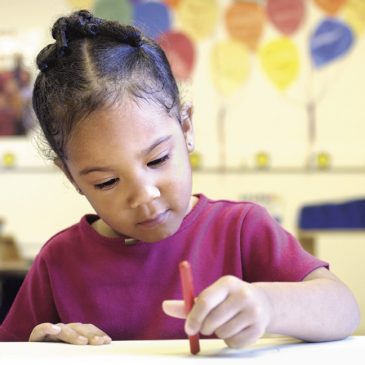
Pathfinder changes that. Using teacher iPhones or tablets, Pathfinder turns authentic classroom moments into data-rich insights — without putting students on screens. A teacher simply captures short video or photo clips of students engaged in literacy activities: reading aloud, writing words, or explaining their thinking.
Each capture is automatically tagged with:
- Student name and date
- Task type (e.g., letter formation, phonics reading, comprehension question)
- Optional audio note from the teacher
These samples are uploaded securely into Pathfinder’s AI Object Capture and Literacy Diagnostic Engine, which analyzes what the teacher sees every day — and translates it into actionable guidance.
AI-Powered Reading Analysis
Pathfinder’s analysis mirrors what a master reading specialist might notice over weeks of close observation:
- Phoneme-grapheme mapping — detecting whether a student says the correct sound while writing a letter.
- Fluency and expression — analyzing oral reading for pace, tone, and phrasing.
- Comprehension depth — interpreting how a student responds to “why” and “how” questions.
- Writing conventions — identifying capitalization, spacing, or punctuation patterns.
Within minutes, the system produces a Visual Diagnostic Report aligned to local, national, and international literacy standards.
From Analysis to Action
Here’s where Pathfinder stands apart: it doesn’t just report — it responds.
The AI engine groups students by shared needs (e.g., Emergent Decoders, Fluent Name Writers, Reversal Support) and instantly suggests next-day instruction aligned with the Science of Reading.
For example:
- Students reversing letters receive directionality modeling and mirror tracing exercises.
- Emerging readers are guided through oral blending routines and patterned text rereads.
- Fluent readers are challenged with inferencing prompts and paired reading sessions.
By the next morning, teachers can implement these recommendations directly — no waiting for test results or reports from external systems. Pathfinder bridges observation and action in real time.
Why It Matters
Reading proficiency is not built through more testing, but through more understanding. Pathfinder helps teachers see learning as it happens — so that every student, regardless of starting point, can find their path to literacy.
Support the Pathfinder Way
Join us in empowering teachers and transforming literacy through innovation, evidence, and empathy.
Learn more at PathfinderAssessments.org — and support the Pathfinder way.