Pathfinder
Making Learning Visible
Pathfinder is a research platform designed to help educators see how student understanding develops over time.

Pathfinder is a research platform designed to help educators see how student understanding develops over time.
It’s in student work, conversations, assessments, observations, projects, revisions, and those moments when something finally clicks. The trouble is that much of it is scattered, easy to lose, or hard to connect from one month to the next.
We’re building Pathfinder to find out whether technology can help. Can we organize the evidence students already produce, spot meaningful patterns over time, and make those patterns more useful to teachers and learners? We’re starting with what teachers need.

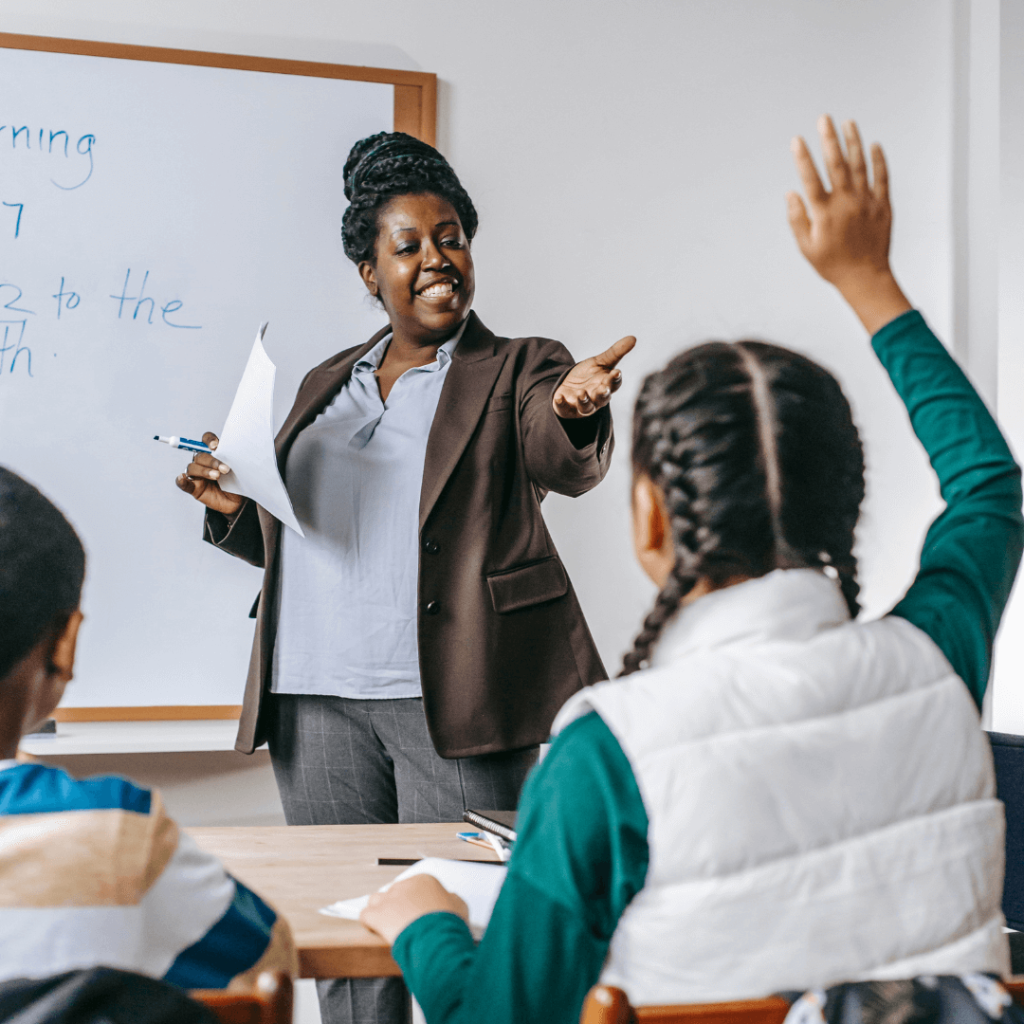
Pathfinder did not begin with technology. It began with a question: How do we know when learning is happening?
Pathfinder brings these ideas together in a system we can test.

Pathfinder is designed around a simple sequence.
Teachers and students generate evidence during ordinary learning: student work, assessments, observations, explanations, reflections, photographs, projects, and other artifacts.
Pathfinder investigates how meaningful evidence can be captured efficiently without turning teaching into data entry.
A student’s learning story rarely exists in one system. Evidence may be distributed across assignments, assessments, teacher observations, learning platforms, portfolios, and classroom interactions.
Pathfinder is designed to connect relevant evidence into a longitudinal record.
As evidence accumulates, Pathfinder can help educators examine changes across time.
The objective is not simply to store evidence. It is to make development more visible.”
Pathfinder does not determine what a student understands. It helps place relevant evidence in front of the people best positioned to make that judgment.
Teachers can examine the evidence, question apparent patterns, add context, compare observations, and decide whether an interpretation is justified.
Pathfinder supports teacher judgment. It does not replace it.
The purpose of understanding learning is not merely to describe it. It is to improve what happens next.
Evidence may suggest that a learner needs:
Pathfinder is designed to shorten the distance between evidence and action.
The next learning experience produces new evidence. Teachers respond. Students reflect. Understanding changes. The model updates. And the process begins again.
Learning becomes a continuing process rather than a sequence of disconnected measurements.
Traditional assessment remains important. Pathfinder does not require schools to abandon tests, grades, rubrics, or other established measures. Instead, we are investigating what happens when those measures become part of a larger body of evidence.
Traditional Assessment | Pathfinder Research Model |
|---|---|
| Periodic snapshots | Evidence across time |
| Individual measures | Multiple sources |
| Primarily scores | Evidence + context |
| Measures performance | Investigates development |
| Reports what happened | Helps consider what happens next |
| Student as assessed | Student as participant |
| Teacher receives results | Teacher interrogates evidence |
Artificial intelligence creates extraordinary possibilities for organizing and examining complex information. It also creates an important boundary. AI should not become the authority on what a child understands.
Pathfinder may use computational tools to organize evidence, retrieve relevant information, identify possible patterns, and help educators ask better questions. But interpretation remains contextual. Teachers know things the system may not.
Pathfinder therefore treats artificial intelligence as a support for human intelligence, not a substitute for it.
“Pathfinder supports teacher judgment. It does not replace it.”
Pathfinder also allows us to investigate a different role for students. Instead of being only the subjects of assessment, students may help document and interpret their own learning.
Over time, this can create something very different from a conventional student record. A living learning portfolio. Not simply: What did I earn? But: How has my thinking changed?
That question may be one of Pathfinder’s most important contributions to our research.

Schools already have technology. Pathfinder should not require educators to discard the systems that already work. Our interoperability research asks whether Pathfinder can eventually connect evidence from the tools schools already use — including assessment platforms, learning management systems, student information systems, digital portfolios, curriculum applications, and other sources.
Pathfinder should become a connective layer — not another isolated silo. This is why interoperability is part of the research itself.
Imagine looking at a student record and seeing:
September
The student can identify the concept but struggles to explain it.
October
A classroom discussion reveals a persistent misconception.
November
Student work shows a new connection.
December
The student revises an earlier explanation.
January
The student applies the idea successfully in a new context.
A conventional system may contain all five pieces of information. But they may exist in five different places. Pathfinder asks what becomes possible when we can see the story they tell together.
The SchoolWorks Lab is currently developing Pathfinder Version 1.0 for use in our pilot research program.
The current phase is deliberately focused.We are not attempting to build every possible feature. We are building enough of the system to investigate the central hypothesis:
Can longitudinal learning evidence be captured, organized, interpreted, and used in ways that improve understanding of student learning?
Pathfinder 1.0 establishes the foundation for that investigation across our four pilot settings. The current SchoolWorks operating plan identifies completion of a stable, functional Version 1.0 and its use across the pilot sites as the immediate development objective.
Through Pathfinder and our pilot partnerships, we are investigating whether the model can:
Capture evidence efficiently
without disrupting instruction.
Connect evidence longitudinally
across learning experiences and sources.
Reveal useful patterns
that individual assessments may not show.
Strengthen professional judgment
rather than automate it.
Engage students
in documenting and reflecting on their learning.
Reduce teacher workload
rather than create another administrative burden.
Work across systems
through interoperability.
Work across contexts
including different subjects, ages, schools, and countries.

Pathfinder ultimately asks whether education can move beyond disconnected information toward something more useful:
Learning intelligence. Not intelligence as a score. Not artificial intelligence making decisions about children, but an evolving understanding of:
That is the future Pathfinder is helping us investigate.
Pathfinder is currently moving from development into pilot implementation.
As the research progresses, we will share what works, what does not, what teachers and students teach us, how the model changes, and what the evidence ultimately supports. Because Pathfinder itself must learn.